



Shipbuilding and ship maintenance involve a wide range of lifting operations, from moving steel plates and hull blocks to installing engines and handling deck equipment. Because these tasks differ in load weight, working area, lifting height, and positioning requirements, shipyards normally use several types of cranes rather than one universal lifting system. This guide explains the main types of shipyard cranes used in shipbuilding, ship repair, and maintenance, and outlines the factors to consider when selecting shipyard lifting equipment.
What Are Shipyard Cranes?
Shipyard cranes are lifting systems designed for the working conditions of shipyards, marine workshops, and ship repair facilities. They may be installed outdoors on rails or supporting legs, or indoors on building-mounted runways. Their jobs include lifting hull sections, steel plates, machinery, tools, and maintenance components. The most suitable crane depends on the load, the required travel distance, the available space, and the precision needed during the operation.
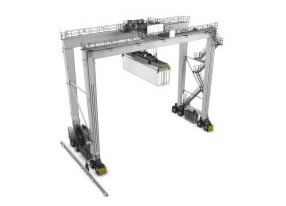
1. Shipyard Gantry Crane (Goliath Crane)
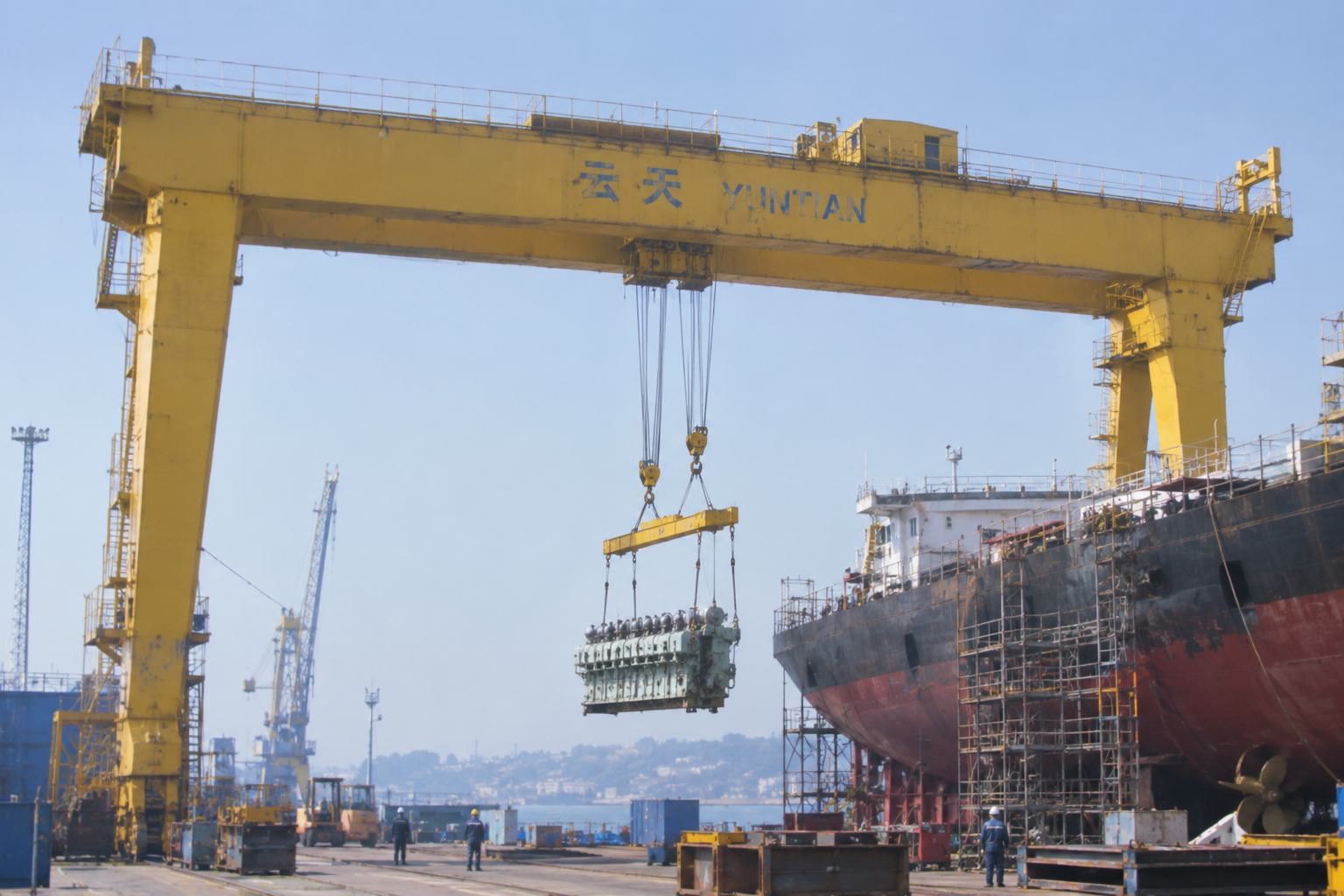
A shipyard gantry crane, also called a Goliath crane, is one of the most recognizable heavy lifting systems in large shipyards. It typically consists of supporting legs, a main girder, a trolley, and a lifting mechanism. The crane travels along ground rails or a prepared runway and can cover a large outdoor working area.
Typical applications
· Lifting and positioning large hull blocks during ship assembly.
· Handling steel plates, beams, engines, and other heavy ship components.
· Supporting outdoor fabrication, outfitting, and equipment installation.
· Transferring heavy loads between production stages in a shipyard.
Compared with a general-purpose gantry crane, a shipbuilding gantry crane is often designed with a larger span, lifting capacity, and working range to suit the dimensions of the vessels and hull sections being assembled. The final configuration should be based on the actual load, span, lifting height, duty cycle, rail arrangement, and environmental conditions.
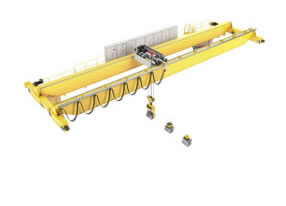
2. Double Girder Overhead Crane for Shipbuilding Workshops
Double girder overhead cranes are commonly used in shipyard steel fabrication workshops, assembly areas, and maintenance workshops. Unlike a gantry crane, an overhead crane runs on elevated runway rails supported by the building structure. This arrangement makes it suitable for indoor lifting where floor space must remain available for production and transport.
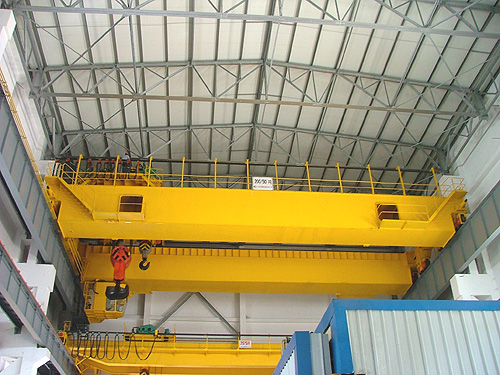
Typical applications
· Handling steel plates and structural components in fabrication workshops.
· Moving machinery and equipment during assembly.
· Supporting engine-room and maintenance-workshop operations.
· Positioning heavy components for welding, fitting, inspection, or repair.
Depending on the working conditions, an overhead crane may be configured for different lifting capacities, speeds, control methods, and duty classifications. The selection should also consider the building structure, runway length, available headroom, power supply, and required lifting height.
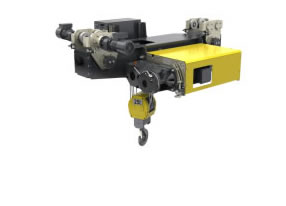
3. Jib Crane for Ship Maintenance
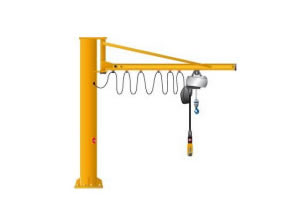
Jib cranes are useful when maintenance work is concentrated in a limited area and operators need flexible, controlled lifting. They are often installed near repair stations, workshops, vessel access points, or equipment-maintenance areas.
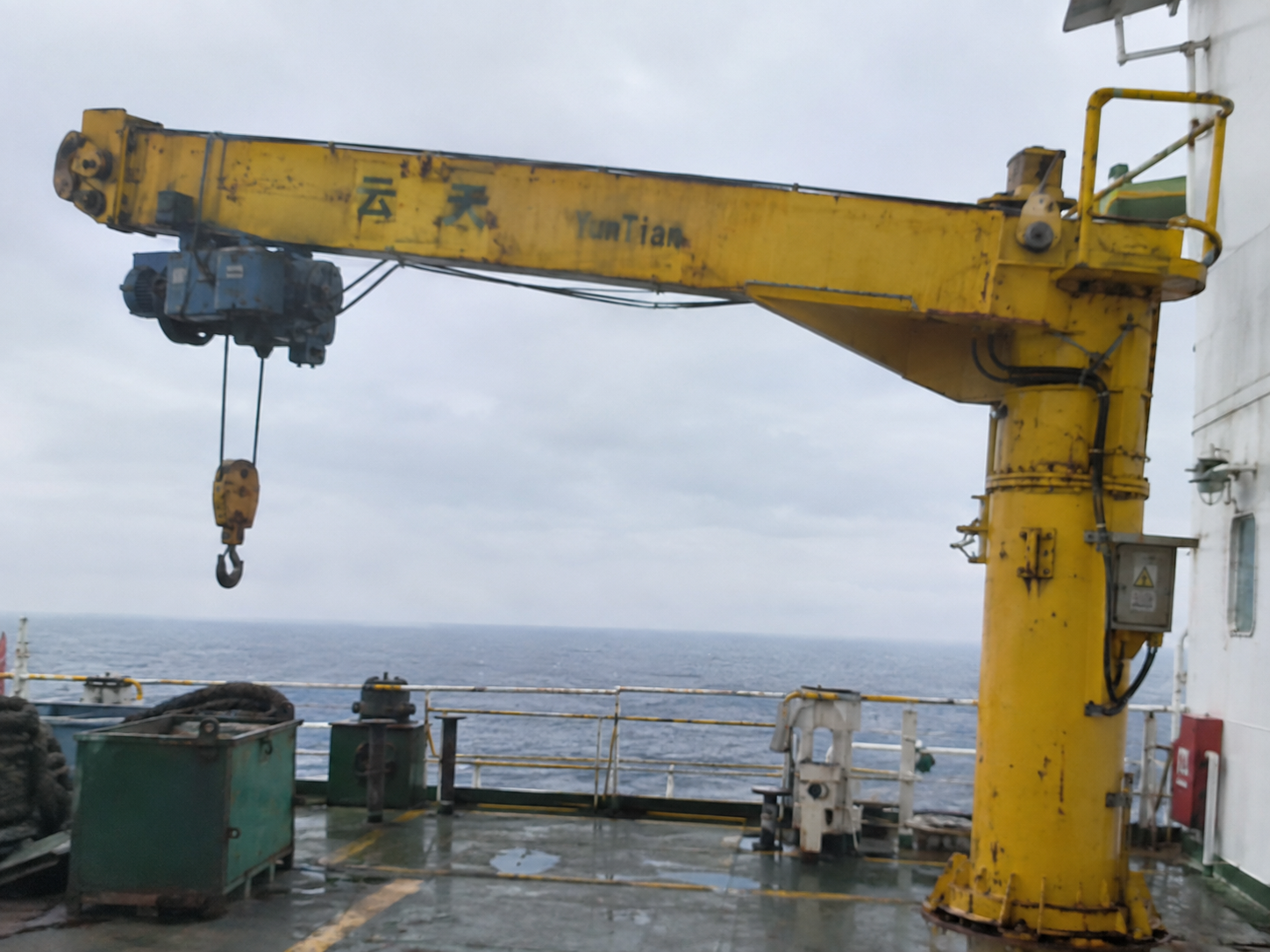
Typical applications
· Lifting deck fittings, tools, and spare parts.
· Handling electrical equipment and smaller machinery.
· Removing and installing components during routine maintenance.
· Supporting localized repair work where a large crane cannot easily reach.
A jib crane does not replace a heavy shipyard gantry crane. Instead, the two systems serve different purposes. A gantry crane is intended for large loads and wide coverage, while a jib crane is better suited to short-range lifting, frequent positioning, and maintenance tasks close to the vessel or repair station.
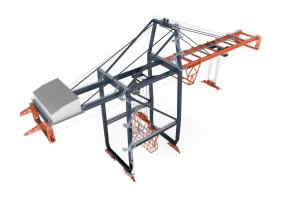
4. Portal Crane for Marine and Shipyard Operations
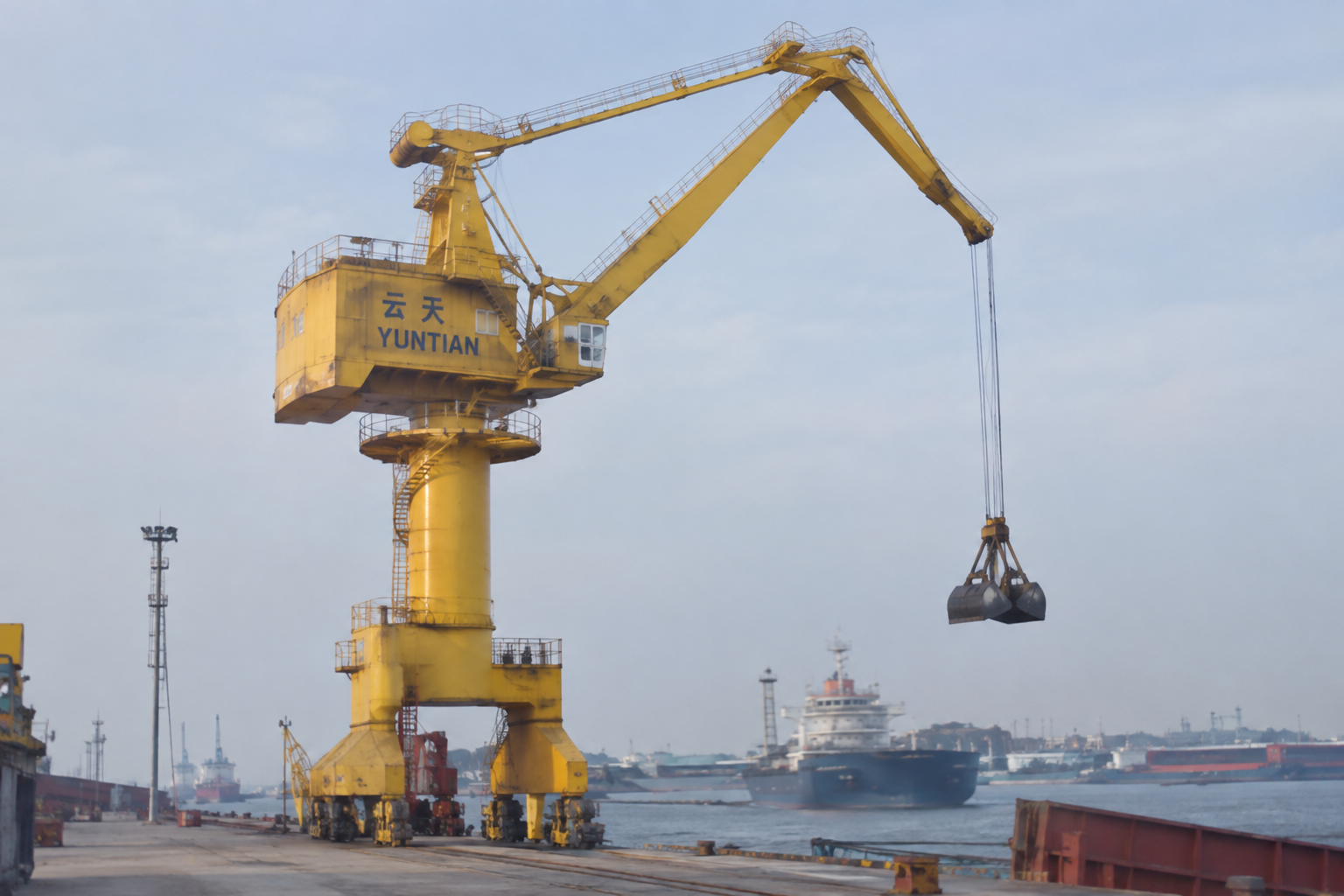
A portal crane combines a supporting portal structure with a slewing jib. Its rotating upper structure allows loads to be handled across a broad working radius, making it useful for certain outdoor marine and shipyard operations.
When selecting a portal crane, engineers normally evaluate rated lifting capacity, working radius, lifting height, slewing range, rail conditions, foundation requirements, and wind loads. The crane can then be configured for the site's material-handling workflow and available operating space.
5. Marine Crane for Ship Repair and Equipment Handling
Ship repair and maintenance facilities may also require marine cranes or other specialized lifting systems for vessel equipment and components. These cranes support tasks where loads must be lifted, aligned, removed, or reinstalled in a marine environment.
· Handling shipboard equipment during repair or replacement.
· Supporting maintenance of deck machinery and auxiliary systems.
· Lifting components in areas where access and positioning are restricted.
· Working with equipment that may be exposed to humidity, salt spray, and outdoor weather.
Environmental protection, corrosion resistance, access restrictions, and load positioning requirements should be considered together when designing or selecting this type of lifting equipment.
Shipyard Crane Types Comparison
Crane type |
Main application |
Typical location |
Main advantage |
Shipyard gantry crane |
Hull assembly and heavy lifting |
Outdoor shipyard |
Large capacity and wide coverage |
Double girder overhead crane |
Steel fabrication and workshop handling |
Indoor workshop |
Efficient use of building space |
Jib crane |
Localized maintenance and equipment handling |
Repair station or workshop |
Flexible and precise short-range lifting |
Portal crane |
Marine material handling and outdoor lifting |
Yard or quay |
Wide working radius through slewing |
Marine crane |
Ship repair and vessel equipment handling |
Shipyard or marine facility |
Adapted to specialized marine tasks |
How to Choose the Right Crane for a Shipyard
Choosing the right shipyard crane starts with the actual workflow rather than the crane name alone. A shipyard crane manufacturer or engineering team should review the following factors before recommending or customizing equipment:
1. Lifting capacity: What are the maximum and typical weights of the hull sections, machinery, steel, or maintenance components?
2. Span and working range: How much of the yard or workshop must the crane cover, and are there access restrictions?
3. Lifting height and headroom: What height is required for assembly, installation, storage, and safe load movement?
4. Indoor or outdoor conditions: Will the crane operate in a workshop, open yard, berth, or marine environment?
5. Load type and lifting method: Are the loads steel plates, bulk materials, machinery, engines, or delicate equipment requiring special attachments?
6. Duty cycle and control: How frequently will the crane operate, and is manual, remote, or automated control required?
7. Site infrastructure: Can the existing foundation, rails, building structure, and power supply support the proposed crane?
8. Environmental protection: Do wind, humidity, salt spray, temperature, or corrosion protection requirements affect the design?
FAQ
Q:What is the most commonly used crane in a shipyard?
A:Large shipyards commonly use gantry cranes for heavy hull assembly and outdoor material handling, while overhead and jib cranes support workshop and maintenance operations.
Q:What is the difference between a shipyard gantry crane and an overhead crane?
A:A gantry crane normally travels on supporting legs and ground rails, often outdoors. An overhead crane runs on elevated runway rails supported by a building structure, usually inside a workshop.
Q:What type of crane is used for ship maintenance?
A:Jib cranes, overhead cranes, gantry cranes, and specialized marine cranes may all be used. The choice depends on the component weight, access, lifting height, and required positioning accuracy.
Q:How do I choose a crane for shipbuilding?
A:Start with the load capacity, span, lifting height, working range, duty cycle, load type, site conditions, and available infrastructure. These factors determine whether a gantry, overhead, jib, portal, or customized crane is appropriate.
Conclusion
The main types of shipyard cranes used in shipbuilding and maintenance include shipyard gantry cranes, double girder overhead cranes, jib cranes, portal cranes, and specialized marine cranes. Each type is suited to a different combination of load, coverage, precision, and working environment. Instead of selecting a crane only by lifting capacity, shipyards should match the equipment to the actual production and maintenance workflow. A detailed review of load characteristics, site conditions, infrastructure, and operating requirements helps ensure that the final shipyard lifting equipment is safe, efficient, and fit for purpose.


