


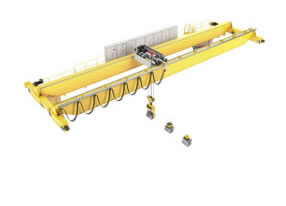
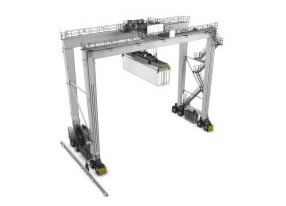
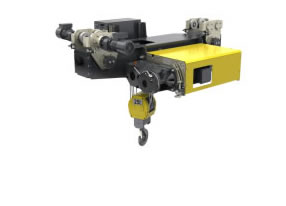
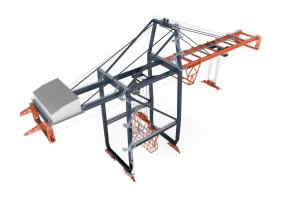
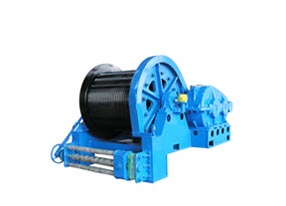
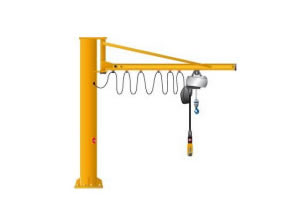
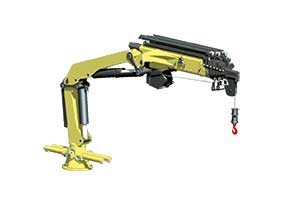

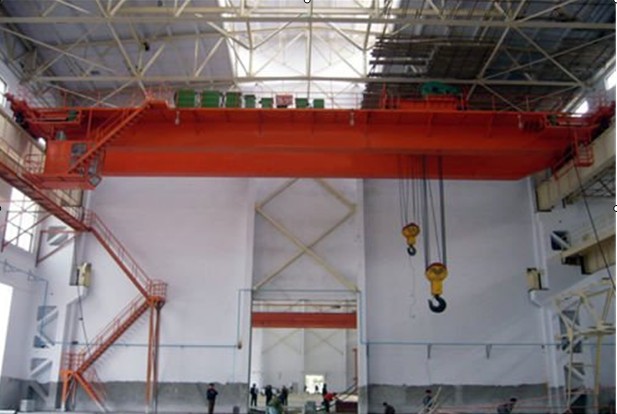
In simple terms, an overhead crane is a high-efficiency lifting system that can be used to replace manual handling and forklifts when heavy loads need to be lifted and moved horizontally. It can be used across a wide range of industrial and manufacturing applications.
When an overhead crane is being selected for a specific operation, lifting capacity should not be considered alone. The maximum span, working environment, travelling speed, lifting height, and other operating requirements should also be taken into account. For example, the requirements for a crane installed in a standard workshop at normal temperature can be very different from those for a crane used in a hazardous chemical area where explosion protection is required.
This article explores the industries in which overhead cranes are commonly used and explains the key factors that should be considered when a crane is selected for different operating conditions.
What Industries Use Overhead Cranes?
Overhead Cranes in the Paper Industry
Paper mills and paper converting facilities typically require paper rolls, pulp bales, rollers, drying cylinders, motors, gearboxes, and other production and maintenance equipment to be handled.
What is lifted?
Typical loads include paper rolls, pulp bales, components of papermaking equipment, and maintenance equipment. Among these applications, paper roll handling is one of the most common.
Why is an overhead crane used?
Paper rolls and equipment components are often heavy and need to be moved repeatedly between production areas, storage areas, and loading or unloading zones.
By making use of the available overhead space, an overhead crane can be used to lift, travel, and position loads within a defined working area while reducing the amount of floor space occupied by ground-based handling equipment.
During equipment inspection, maintenance, or replacement, an overhead crane can also be used to handle large components such as rollers, motors, and gearboxes.
Typical crane requirements
When an overhead crane is being selected, the maximum load, span, lifting height, and operating frequency should be considered. For paper roll handling, the weight and diameter of the rolls, as well as the handling method, should also be considered when the appropriate lifting attachment is selected.
In addition, paper mills may be exposed to moisture, dust, and temperature variations. Electrical components and protective features should therefore be selected according to the actual working environment.
Overhead Cranes in Power Generation
Power plants are required to install, maintain, and handle a wide range of large equipment, including turbines, generators, transformers, motors, pumps, valves, and other critical components.
What is lifted?
Typical loads include turbines and turbine components, generators, transformers, large motors, pumps, valves, and maintenance equipment.
Why is an overhead crane used?
Equipment used in power plants is often heavy, precision-sensitive, and costly, and contact or misalignment may need to be avoided during handling.
With a double-girder overhead crane, smooth three-axis movement can be provided for bridge travel, trolley travel, and lifting. Variable-speed control can also be incorporated, allowing slow-speed operation and more precise positioning to be achieved when required.
Typical crane requirements
For applications involving higher lifting capacities, larger spans, or demanding operating conditions, a double-girder overhead crane may be considered according to the actual requirements.
Where smoother acceleration, deceleration, and positioning are required, variable-frequency drive (VFD) control and other suitable configurations may be considered.
In addition, environmental conditions such as temperature, humidity, dust, and corrosive substances may affect the selection of electrical components and protective measures. These conditions should therefore be evaluated as part of the crane selection process.
Overhead Cranes in Shipbuilding and Ship Repair
In shipbuilding and ship repair, both vessels and their components can be extremely large, heavy, irregularly shaped, and costly to handle. Typical loads include steel plates, structural sections, marine engines, propulsion components, pumps, motors, gearboxes, pipes, and other ship equipment.
What is lifted?
Common loads include steel plates, hull structural sections, marine engines, propulsion system components, pumps, motors, gearboxes, pipes, and other ship equipment.
Why is an overhead crane used?
· Low-speed variable-frequency controllable lifting can reduce the impact on the hull and components.
· For extremely long or irregular hull sections, using two or more machines to evenly distribute the load can achieve a more stable and safer lifting solution.
Typical crane requirements
Shipyards are often exposed to humid and corrosive conditions. Appropriate protection should therefore be provided for electrical components and exposed structural surfaces.
The maximum load, span, lifting height, operating frequency, load geometry, and required lifting attachments should also be considered when the crane is configured for shipbuilding or ship repair applications.
Overhead Cranes in Steel and Metal Production
To understand how overhead cranes are used in steel mills and metal production facilities, it is useful to first identify the types of loads and production equipment that need to be handled.
What is lifted?
Typical loads include steel coils, steel plates, billets, slabs, structural steel, ladles, production equipment, and mechanical components.
Why is an overhead crane used?
These materials often represent the main loads handled during production, and they may need to be lifted, transferred, and positioned frequently.
An overhead crane can be used to cover a defined production area while reducing the amount of floor space occupied by ground transportation equipment.
Forklifts and mobile cranes may have limitations when they are required to operate close to high-temperature materials or red-hot steel. In such conditions, an overhead crane can be configured as a metallurgical crane with suitable protection for high-temperature, dusty, heavy-duty, and high-frequency applications.
Typical crane requirements
In addition to a crane designed for high-temperature service, the appropriate lifting attachment is also important. Different solutions may be required for steel coils, billets, plates, or molten-metal ladles.
Depending on the specific handling operation, lifting hooks, C-hooks for steel coils, billet clamps, electromagnetic lifting magnets, and other specialized attachments may be used.
Where high temperatures, dust, or intense radiant heat are present, heat-resistant components, electrical protection, and other site-specific configurations should also be considered.
Overhead Cranes in Concrete Manufacturing
Unlike steel products, precast concrete components can be vulnerable to impact during handling. Even relatively minor contact may result in surface damage or, in some cases, structural cracking.
What is lifted?
Typical loads include precast concrete wall panels, beams, columns, pipes, slabs, culverts, molds, and other precast components.
Why is an overhead crane used?
During concrete handling operations, the crane hook itself does not necessarily need to come into direct contact with the concrete component. Flexible polyester slings, vacuum lifting devices, rubber-padded lifting heads, and other suitable attachments can be used according to the load characteristics.
Rubber cushioning can also be provided at contact points between the lifting attachment and the concrete component to help reduce the risk of edge damage or surface impact.
Typical crane requirements
Concrete manufacturing environments can generate significant amounts of dust, while moisture may also be present during production and curing.
The crane should therefore be configured with an appropriate level of dust protection, while the steel structure may be provided with a heavy-duty anti-corrosion coating to withstand cement dust and alkaline, humid conditions.
The selection of lifting attachments should also be based on the shape, weight, surface condition, and designed lifting points of each concrete component.
Overhead Cranes in Aerospace Manufacturing and Maintenance
I believe that aerospace is the field that requires the most attention to precision and efficiency. Its complex assembly process dictates that every step must be meticulously carried out.
What is lifted?
Typical loads include aircraft engines, fuselage sections, wings, large structural components, landing gear assemblies, assembly tooling, and maintenance equipment.
Why is an overhead crane used?
·It is equipped with a dual braking system, which can display the load in real time, ensuring safe braking, smooth lifting and lowering, and meeting the nearly stringent safety requirements of aerospace.
·Similar to the shipbuilding industry, the shapes of the compartments and satellite components are asymmetrical, making them prone to tilting. In such cases, adjustable distribution hoisting beams can be used. Different workpieces can be adjusted for the spacing of the lifting points quickly, the center of gravity can be pre-calculated, and the lifting accuracy can be guaranteed.
Typical crane requirements
Aerospace facilities may have specific requirements for cleanliness, environmental control, and equipment reliability. Crane selection should therefore consider the actual load characteristics, handling procedures, operating environment, and required positioning accuracy rather than lifting capacity alone.
Key Advantages of Overhead Cranes
Overall, the main advantages of overhead cranes include the following:
Efficient Material Handling:
Heavy and oversized materials can be repeatedly handled within a defined working area.
Better Use of Floor Space:
Overhead space is utilized, while the amount of floor space occupied by ground equipment and transportation routes can be reduced.
Controlled Positioning:
More stable load positioning can be achieved through controlled lifting, travelling, and variable-speed operation.
Flexible Configurations:
Crane configurations can be adapted to the required load capacity, span, lifting height, operating frequency, working environment, and lifting method.
How to Choose the Right Overhead Crane
When an overhead crane is being selected, the maximum lifting capacity should not be considered in isolation. The following factors should be evaluated:
Load Capacity:
What is the maximum load, and what is the typical working load?
Span and Lifting Height:
What working area needs to be covered, and what lifting height is required?
Duty Class and Operating Frequency:
How many lifting cycles will be performed per day? Is the crane intended for light-duty, frequent, or heavy-duty operation?
Working Environment:
Are high temperatures, dust, moisture, corrosive substances, or other special conditions present?
Lifting Method:
What type of lifting attachment is required? Are irregularly shaped, off-center, or otherwise specialized loads involved?
Positioning Requirements:
What level of control is required for lifting, travelling speed, and load positioning?
The final crane configuration should be determined based on the actual load, working area, operating frequency, lifting method, and environmental conditions rather than simply selecting a crane with a higher lifting capacity.
Conclusion
Overhead cranes are widely used in industries such as paper manufacturing, power generation, shipbuilding and ship repair, steel and metal production, concrete manufacturing, and aerospace manufacturing and maintenance.
Although the loads and working environments vary from one industry to another, the basic crane selection process remains similar: the load to be handled, the location where it will be handled, its weight, the required handling frequency, and the working environment should first be determined. The appropriate crane structure, control system, and lifting attachments can then be selected accordingly.
For complex or specialized applications, further engineering design may be required based on the actual workflow, facility conditions, load characteristics, and lifting requirements.


